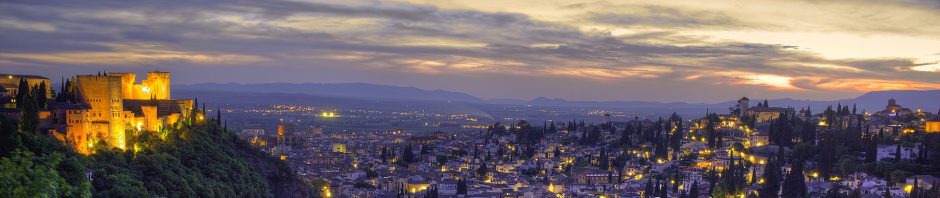
The Science Park, Granada – Parque de las Ciencias

The science park, known as the Parque de las Ciencias in Spanish, is based just outside the center of Granada. Visiting it makes a fantastic day-out for the whole family. 

The Parque de las Ciencias opened in 1995 and was Andalusia’s first interactive museum.

It covers more than 70,000m2  – the park is big. Very big. You’d probably need a couple of days to see it properly.

As the museum is conveniently divided into sections, you can plan beforehand what you really want to see and leave the rest if you have any time.

One of the most fascinating, is a mind game. You sit in front of an “adversary” with your head resting on a metal “reader.”

Between the two of you, is a machine with a metal ball inside, you push the ball using the gamma waves you transmit. The person who is the most restful and meditative wins. Amazing stuff !

This year’s temporary exhibition features fifty mummies from different countries. There are pieces from 24 different organizations across the world.

Collaborating institutions are the Library of Alexandria (Egypt) el Anthropological and Ethnography Museum of the University of Turin (Italia) the South Tyrol Museum of Archaeology de Bolzano (Italy), The university of Oporto´s Natural History Museum (Portugal) the Museums Partner of Innsbruck (Austria) and the Suermondt-Ludwig- Museum in Aachen (Germany). 

Truly an international effort and one of a kind.


Posted in Uncategorized | Leave a comment

Granada Cathedral

Granada Cathedral, or the Cathedral of the Incarnation (Spanish: Catedral de Granada, Santa Iglesia Catedral Metropolitana de la Encarnación de Granada) is the cathedral in the city of Granada, capital of the province of the same name in the Autonomous Region of Andalusia, Spain. The cathedral is the seat of the Archdiocese of Granada.

Granada’s cathedral has a rectangular base due to its five naves that completely cover the cross, which doesn’t stand out over the floor-plan. All of the five naves are staggered in height, the central one being bigger. At the foot of the cathedral there are located two towers. The left one, called the tower of San Miguel, being a buttress which replaced the planned tower on that side.

The main chapel consists of a series of Corinthian columns on which capitals is the entablature and, over it, the vault, which houses a series of delicate stained glass windows.

The facade consists of a framed structure in the form of a triumphal arch with portals and canvas. It consists of three pillars crowned by semicircular arches supported on pilasters, similar to San Andrés de Mantua of Leon Battista Alberti. The pilasters don’t have capitals but projections sculptured in the walls, as well as attached marble medallions. Above the main door is located a marble tondo from José Laughing on the Annunciation. It should also be highlighted the presence of a vase with lilies at the top, alluding to the virgin and pure nature of the mother of God.

The sacrarium, raised between 1706 and 1759, follows the classic proportions of the whole, keeping the multiple columns of the transept the shapes of the compound of Siloam.

Posted in Uncategorized | Leave a comment

GRANADA TREASURES

Posted in Uncategorized | Leave a comment

Alhambra

The Alhambra is a palace and fortress complex located in Granada, Andalusia, Spain. It was originally constructed as a small fortress in AD 889 on the remains of Roman fortifications, and then largely ignored until its ruins were renovated and rebuilt in the mid-13th century by the Moorish emir Mohammed ben Al-Ahmar of the Emirate of Granada, who built its current palace and walls.

The Nasrid architecture marked the end of the glorious period that started with the Umayyads in Cordoba in the 8th century. The architects of the Cordovan mosque, which was built a long time before the Alhambra, did not influence this architecture. It includes some of the typical elements of the andalusian architecture, such as the horseshoe arch with sprandel (square wide frame which envelopes the arch) and the arch scallops (arch scallop of triangular shape), as well as its own special elements such as the capitals of the columns of the Alhambra.

The greatest concern of the architects of the Alhambra was to cover every single space with decoration, no matter the size of the space. No decorative element was enough. Most of the interior arches are false arches, with no structure; they are there only to decorate. Walls are covered with beautiful and extremely rich ceramics and plasterwork. And the coverings have wooden frames that have been exquisitely carved, etc.

Even though the Muslim art bans the representation of figures, the decorating themes in the Alhambra are quite varied. The classical calligraphic decoration is used, in particular cursive and kufic inscriptions, which reproduce the words of Zawi ben Ziri (founder of the Nasrid dynasty): “Only God is Victor”, and poems written by different poets of the court.

The decorative elements most often used by these architects were stylised vegetal forms, interlacing decoration and the nets of rhombuses.

The Alhambra was built with its own special type of column, which is not used in any other building. This column has a very fine cylindrical shaft, the base of which has a big concave moulding and is decorated with rings on the top part. The capital is divided into two bodies and the first one, cylindrically shaped, has a very simple decoration and a prism with a rounded-angled base and stylised vegetal forms as decoration.

One of the most impressive decorative elements used in the Alhambra is the mocarabe vault, formed by little cells or alveoluses placed one on top of the other one and which may be admired in the Hall of the Abencerrajes(Sala de los Abencerrajes) and the Hall of the Two Sisters (Sala de las Dos Hermanas).

Posted in Uncategorized | Leave a comment